



A silk-upholstered armchair passed down from a grandmother, or a velvet sofa that anchors the whole living room, deserves more caution than a quick pass with a rented machine. Fine fabric upholstery cleaning is not the same as freshening up an everyday sectional, and treating it that way is how heirloom pieces end up permanently damaged rather than restored. Knowing the difference before booking anyone matters more than most homeowners realize.
Why Fine Fabrics Cannot Be Treated Like Everyday Upholstery
Silk, velvet, linen, wool, and brocade all respond to heat, moisture, and agitation in ways that synthetic blends do not. What works beautifully on a polyester sectional can leave a permanent mark on a natural fiber weave.
Fine fabric upholstery cleaning starts with understanding that these materials were never designed for aggressive scrubbing or heavy saturation in the first place. Respecting that, from the very first step, is what separates safe cleaning from a costly mistake.
What Can Go Wrong With the Wrong Approach
Water on silk can leave watermarks or rings that never fully disappear, even after the fabric dries. Rubbing velvet the wrong direction crushes the pile, leaving a dull patch that stands out against the surrounding sheen.
Excess moisture left sitting in dense padding can lead to mold growth long after the surface looks dry. Many people wonder: can you steam clean velvet? The honest answer depends entirely on whether the fibers are natural or synthetic, which is exactly the kind of detail a specialist checks before ever touching the fabric.
Why DIY Cleaning Kits Are Especially Risky on Delicate Weaves
Store-bought foam cleaners and spot removers are formulated for common household fabrics, not fine weaves. Using one on silk or an antique brocade can set a stain permanently or bleed color across the fabric in a way that no amount of follow-up cleaning can undo.
Even a gentle-seeming approach like scrubbing with a damp cloth can push a stain deeper or spread it wider than it started. This is often behind the question: “Is dry cleaning better than steam cleaning for delicate fabrics?” For fine weaves, the more controlled solvent-based approach usually wins.
What Makes Fine Fabric Upholstery Cleaning a Specialist Skill
Identifying the fabric composition correctly comes first, since silk, wool, and various blends all call for different handling. A hidden test spot always comes next, checking for colorfastness and any reaction before a single visible surface is touched.
From there, the choice between a water-based method or a solvent-based approach depends on what the fabric can safely tolerate. People often ask how to clean silk upholstery safely, and the short answer is that it rarely involves water.
How We Approach Delicate and Antique Pieces
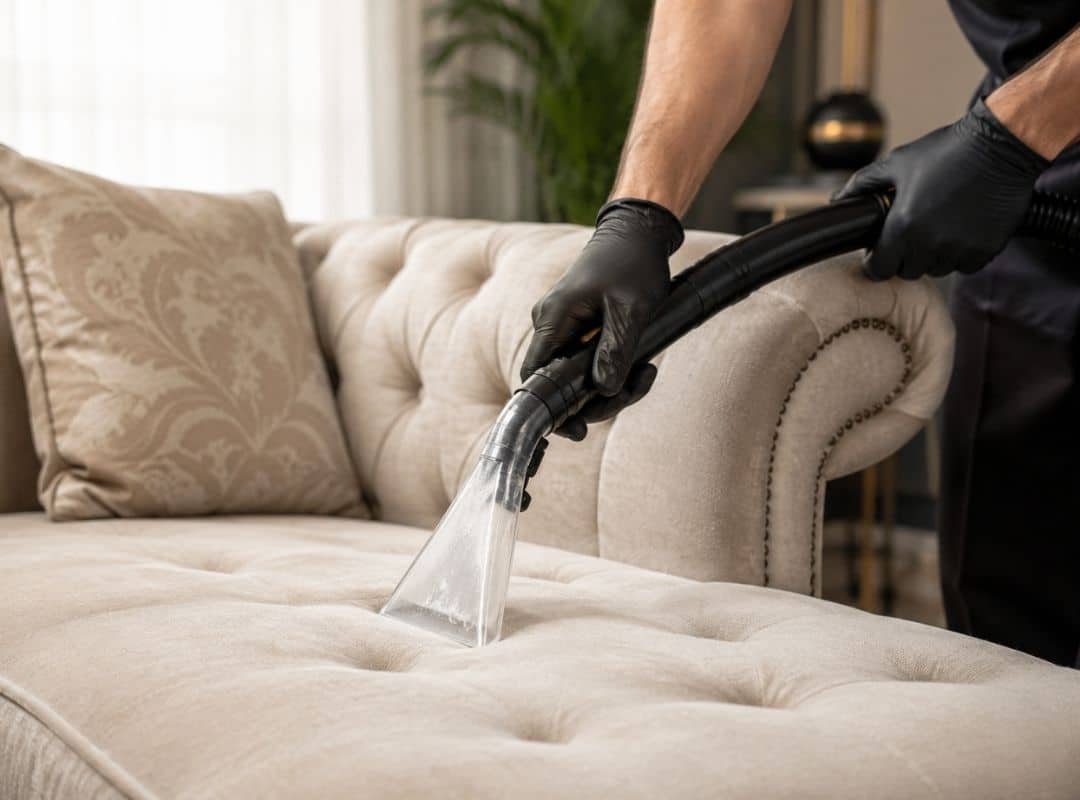
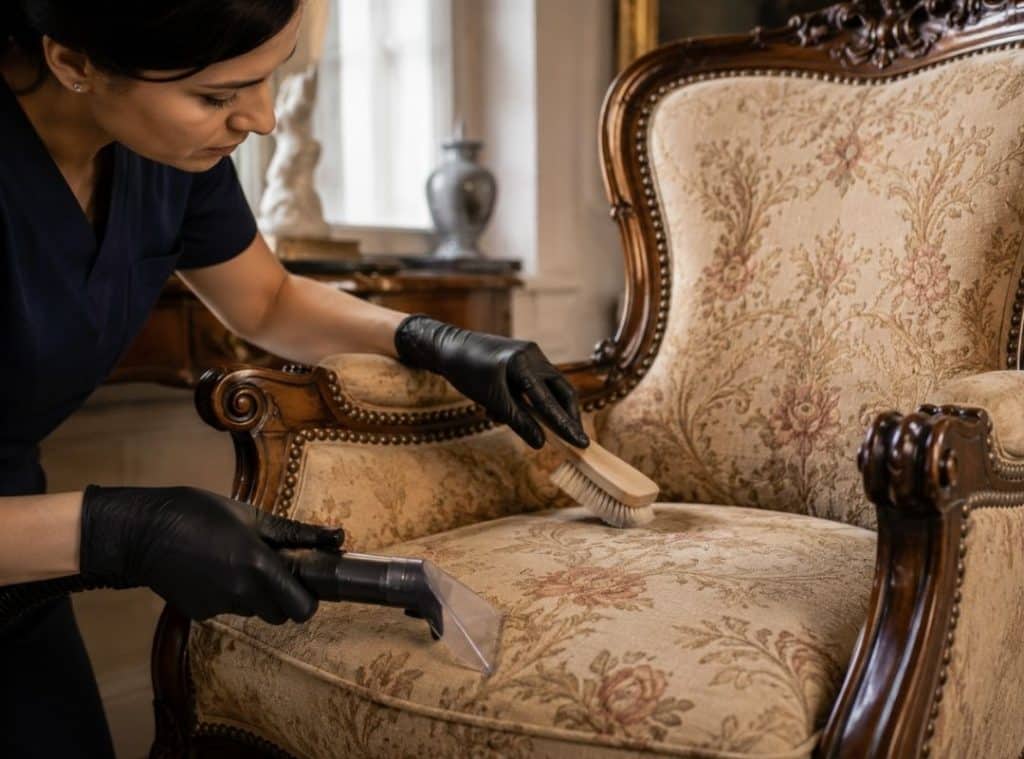
We check fabric codes before starting any job, using water-based cleaning only when a fabric can handle it and switching to gentle dry solvents when it cannot. Distilled water replaces tap water whenever moisture is used, since mineral deposits can cause delicate fabrics to become discolored.
For extremely fragile weaves, the safest option is careful vacuuming rather than any liquid treatment, keeping the fabric completely dry throughout the process.
Caring for Fine Fabric Furniture Between Cleanings
Keeping delicate upholstery out of direct sunlight helps prevent fading between professional visits. Rotating cushions evenly also spreads out wear so one section does not break down faster than the rest.
If a spill happens, blot gently with a dry cloth rather than rubbing, and resist the urge to treat it yourself with a household cleaner.
Frequently Asked Questions
Is it safe to clean antique furniture myself?
Generally, no. Antique and delicate fabrics can react unpredictably to common cleaning products, so professional evaluation is the safer route.
How often should delicate upholstery be cleaned?
Once a year is typical for most fine fabric pieces, though lightly used furniture may need it less often.
Will cleaning change the texture of velvet?
Done correctly, no. The pile should look and feel the same afterward, just free of embedded dirt and oils.
Can silk upholstery be cleaned without any moisture?
Yes, in most cases,, a dry-solvent approach handles silk safely without the risks that water-based cleaning introduces.
Do you test fabric before cleaning it?
Always. A hidden spot test happens before any product touches a visible part of the furniture.
Trust Fine Fabrics to Careful Hands
Fine fabric upholstery cleaning rewards patience and the right technique far more than it rewards speed. A piece of furniture that has lasted generations deserves a process built around preserving it, not just making it look clean for a season. When it is time to care for your finest pieces, let us handle them the way they deserve.