



Table of Contents
If you live anywhere near the water on Long Island, you already know this truth: your home ages differently here. The ocean air doesn’t just rust cars and fog windows—it quietly works its way into your floors. Carpets, especially, take the hit. Sand, salt, moisture, and humidity team up like a slow leak you don’t notice until the damage is done.
Professional carpet cleaning isn’t about making things look nice for company. In coastal homes, it’s about keeping your flooring from aging twice as fast as it should.
Why Long Island’s Coastal Environment Is Tough on Carpets
Salt Air Isn’t Just Outside—It’s in Your Floors
Salt travels. It comes in on shoes, pets, beach bags, and even open windows. Once salt crystals settle into carpet fibers, they behave like tiny pieces of glass. Every step grinds them deeper.
Over time, that grinding leads to:
- Fiber thinning
- Fraying
- Permanent traffic lanes
Humidity Keeps Carpets From Ever Fully Drying
Long Island’s humidity doesn’t take breaks. Even carpets that feel dry often hold moisture deep down in the padding. According to the EPA’s indoor air quality guidance, moisture trapped in flooring increases the risk of mold growth and material breakdown
What Actually Causes Carpet Fibers to Break Down
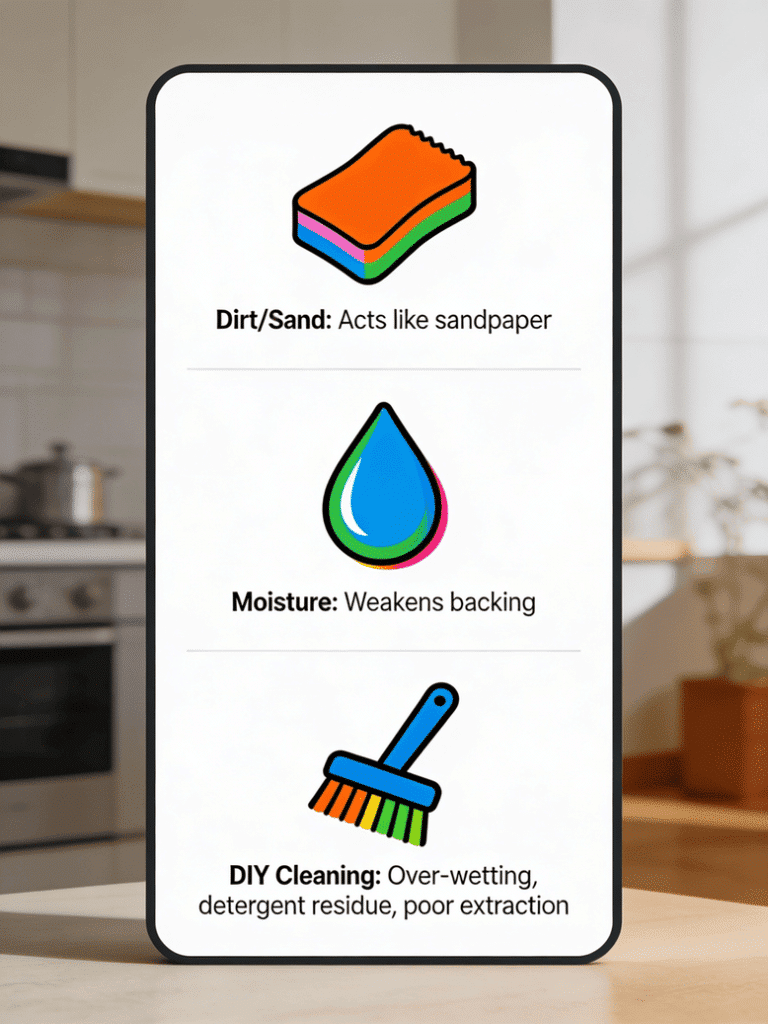
Dirt and Sand Work Like Sandpaper
Vacuuming removes surface debris. What it doesn’t remove is the grit packed into the base of the carpet. That’s where damage starts.
Moisture Weakens Carpet Backing
Carpet backing holds everything together. Moisture breaks down adhesives, leading to rippling, loosening, and early failure.
DIY Cleaning Often Makes It Worse
Home machines tend to:
- Over-wet carpets
- Leave detergent residue
- Fail at deep extraction
That residue attracts dirt faster, turning carpets into magnets for grime.
Why Professional Carpet Cleaning Works Differently
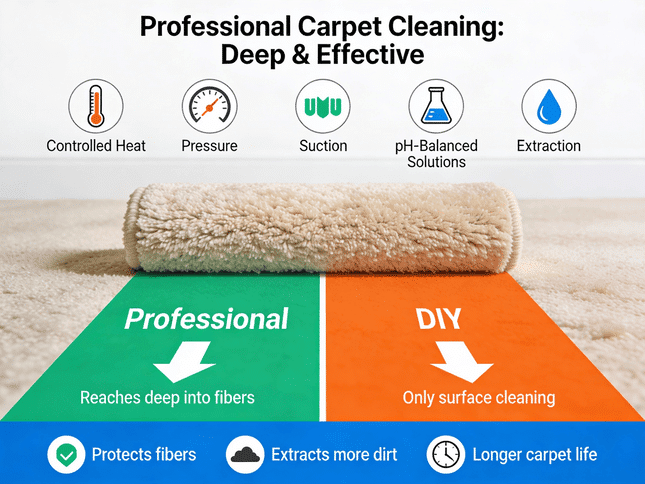
It Reaches What Vacuums and DIY Machines Can’t
Professional systems use controlled heat, pressure, and suction to remove soil from the base of the fibers—not just the surface.
pH-Balanced Solutions Protect Fibers
Harsh cleaners strip fibers. Professional solutions clean without drying them out or weakening their structure.
Extraction Matters More Than Water
It’s not about how much water goes in—it’s about how much comes out.
How Professional Carpet Cleaning Extends Carpet Life
- It Reduces Fiber Abrasion
Removing grit means less friction. Less friction means fibers don’t snap under pressure.
- It Prevents Matting and Crushing
Regular professional cleaning lifts fibers back into place, especially in hallways and living rooms.
- It Protects the Padding Underneath
Padding absorbs moisture and odors. Once it fails, the carpet above it follows.
Why Coastal Homes Need More Frequent Cleaning
| Home Type | Recommended Frequency |
|---|---|
| Oceanfront homes | Every 6 months |
| Homes with pets | Every 6 months |
| Rental properties | Every 3–6 months |
| Inland Long Island homes | Every 9–12 months |
Best Professional Cleaning Methods for Long Island Homes
- Hot Water Extraction (Steam Cleaning)
Ideal for deep soil removal when paired with strong extraction. Learn more about professional methods here:
🔗 https://steamsquad.com/steam-vs-shampoo-carpet-cleaning-which-ones-really-worth-your-money/
- Low-Moisture Encapsulation Cleaning
Excellent for humid homes where drying speed matters.
- Anti-Microbial Treatments
These reduce mold and odor risk after cleaning.
The Financial Side: Cleaning vs Replacement
Replacing carpet in Long Island homes often costs $4,000–$8,000+, depending on size and material.
Routine professional cleaning costs a fraction of that and delays replacement by years.
For cost breakdowns, see:
🔗 https://steamsquad.com/understanding-carpet-cleaning-costs-in-long-island-ny-a-comprehensive-guide/
Signs Your Carpet Is Wearing Faster Than It Should
- Musty odors that won’t go away
- Stiff or crunchy fibers
- Visible traffic lanes
- Ripples or looseness
Early intervention often saves the carpet. Waiting usually doesn’t.
Choosing the Right Carpet Cleaner in Long Island
- Local Experience Matters
Coastal homes aren’t the same as inland properties. Moisture control matters.
- Certifications Count
Look for IICRC-certified professionals who understand fiber types and backing systems.
- Avoid Too-Good-To-Be-True Pricing
Cheap cleaning often leads to expensive replacement.
Carpet Cleaning and Indoor Air Quality
Carpets trap:
- Allergens
- Mold spores
- Pet dander
The CDC notes that proper moisture control and cleaning reduce indoor air health risks
https://www.cdc.gov/mold-health/about/index.html
How to Prepare for Professional Carpet Cleaning
- Remove small items
- Identify problem areas
- Keep pets off freshly cleaned carpets until dry
Drying times vary, but professional methods reduce moisture retention significantly.
Common Coastal Carpet Myths
Carpets Don’t Last Near the Beach Anyway”
They can—if maintained correctly.
“More Water Means Deeper Cleaning”
It usually means more damage.
FAQs
Yes. By removing abrasive dirt and moisture, it significantly slows fiber breakdown.
Yes, when done properly with strong extraction and controlled moisture.
With proper care, 10–15 years instead of 5–7.
Early-stage salt buildup can be neutralized and removed.
No. Proper professional cleaning actually protects fibers.