



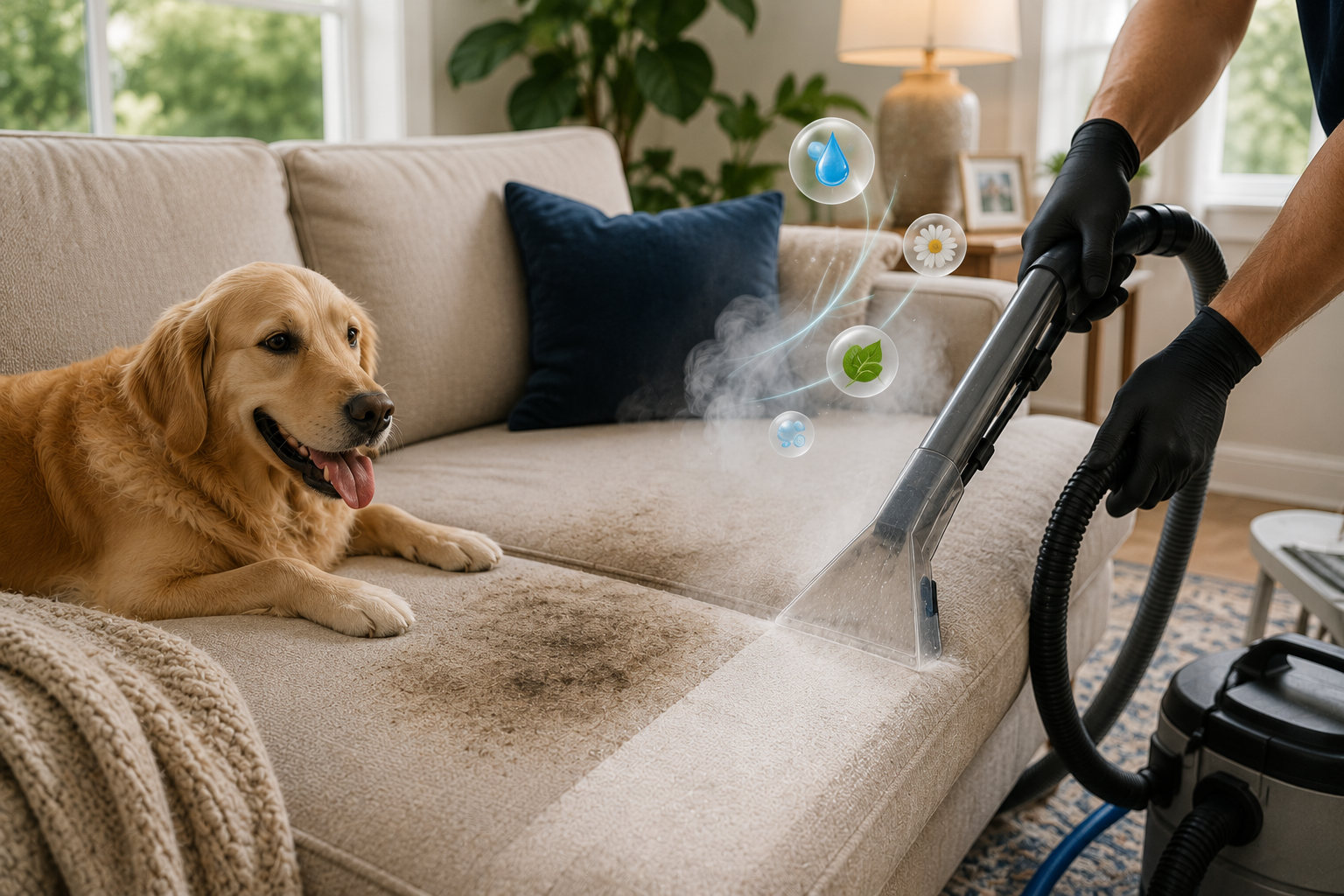
You walk into your living room and catch that smell before you even sit down. Embarrassing when guests visit and frustrating, no matter how many sprays you try. If your sofa keeps smelling like your pet, this post explains exactly why that keeps happening. Pet odor removal from upholstery is not about masking the smell. It is about reaching where the odor actually lives and eliminating it at the source. By the end, you will understand the full process and have a clear path to a genuinely fresh home this summer.
Why Pet Odors in Upholstery Are So Stubborn
The reason store-bought sprays never fully solve the problem is straightforward. Pet odors do not live on the surface of your sofa. They absorb into the fabric weave, seep into the cushion filling, and in cases of pet accidents, reach the foam padding and frame underneath.
When you spray a surface product on a fabric, you are treating the top layer of the fabric. The odor compounds sitting two or three inches deeper are completely untouched. A few hours later, those compounds work their way back to the surface and the smell returns, sometimes stronger than before because the spray has disturbed the buildup.
Summer makes this much worse on Long Island. Heat activates odor compounds, and humidity encourages the bacteria behind pet smells. A sofa that was fine in February will announce itself loudly by July.
What Professional Pet Odor Removal from Upholstery Actually Does
Professional odor removal is a multi-step process that works from the inside out, not just the surface in.
Here is how it works:
- Fabric assessment: A trained technician identifies the upholstery material and selects the right cleaning approach. Using the wrong method can damage fibers while still failing to remove the odor.
- Pre-treatment with enzyme-based solution: Enzyme cleaners break down the organic compounds in pet urine, dander, and body oils at a molecular level. This is the step that store products simply cannot replicate at the required concentration and depth.
- Deep extraction: Hot water extraction or an appropriate low-moisture method is used to flush the broken-down odor compounds out of the fabric and cushion layers, then extract them along with the cleaning solution.
- Deodorizing treatment: A neutralizing agent is applied after extraction to address any remaining odor-causing residues and leave the fabric genuinely fresh, not just clean-smelling for a day.
- Post-clean inspection: The technician reviews the results with you and identifies any areas that may need a follow-up pass.
This process reaches where sprays cannot and removes the odor rather than covering it.
The Role of Pet Dander in Upholstery Odor
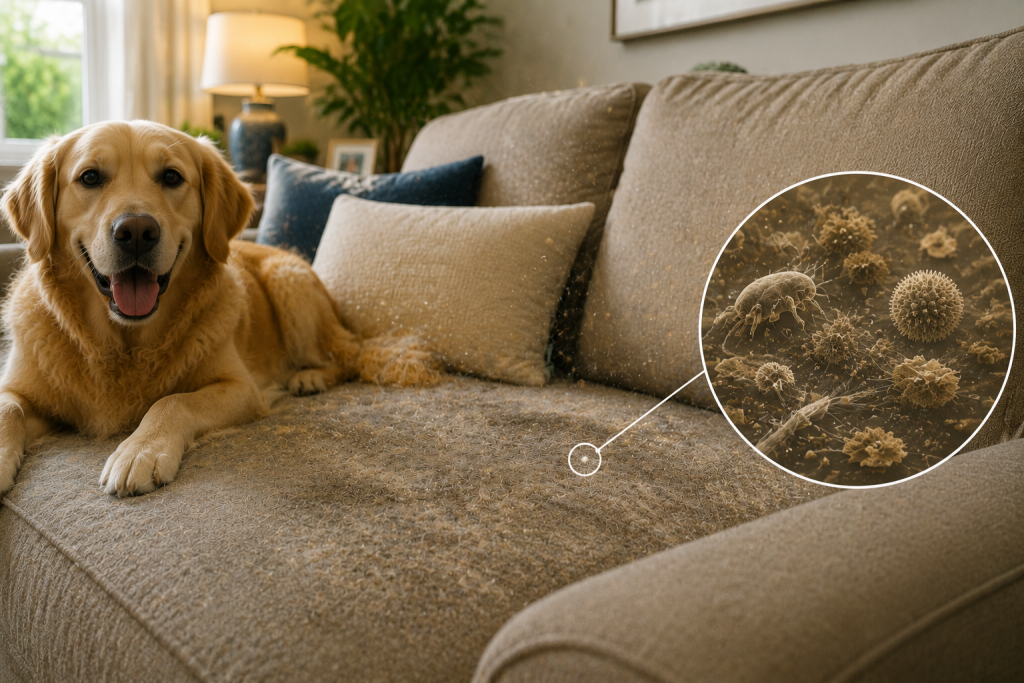
Most pet owners focus on accidents and visible stains, but dander is a constant, invisible contributor to sofa odors. Pets shed microscopic skin flakes that carry natural oils and proteins, which break down over time, resulting in a persistent low-level smell.
This is why a sofa can develop a noticeable odor even in homes where accidents are rare, and the pet is well-groomed. The buildup happens slowly until one day the sofa just smells like the pet who loves it most.
Regular professional cleaning prevents this buildup from reaching that point. Steam Squad’s upholstery cleaning service is specifically designed to address both the visible and invisible contributors to pet odor, using natural, non-toxic products that are safe for the animals and people in your home.
What Types of Upholstery Hold Pet Odors Most Strongly
Some fabrics are more prone to odor retention than others. Knowing where your sofa falls helps set realistic expectations.
- Woven and textured fabrics like chenille, tweed, and boucle trap odor compounds in their complex fiber structure and are among the hardest to freshen with surface methods alone.
- Microfiber is popular and durable, but its densely packed fibers trap fine particles and moisture, leading to significant odor retention over time.
- Natural fibers like cotton and wool readily absorb organic material, which means odor compounds penetrate deeply and require thorough extraction to remove.
- Leather and faux leather are easier to wipe clean on the surface, but odors concentrate in seams, cushion gaps, and the underlying foam, where cleaning is harder to reach.
How Often Should Pet Owners Have Upholstery Professionally Cleaned?
For homes with one or more pets, every 6 to 12 months is the right schedule. If a pet accident has occurred, treat it as soon as possible. The longer urine sits in the cushion material, the harder it becomes to fully neutralize.
Between professional visits, vacuuming upholstery weekly with a brush attachment slows the buildup rate, though it does not replace deep cleaning.
Conclusion
Pet odor removal from upholstery is one of those jobs where the right method makes all the difference. Sprays buy time at best. Professional enzyme treatment and deep extraction actually solve the problem by reaching where the odor lives and pulling it out. Summer on Long Island is not the time to live with a sofa that announces your pets before you do.
Give your furniture the reset it needs. Book an upholstery cleaning with Steam Squad and walk back into a living room that smells like a home.
FAQs
1. Can professional cleaning fully remove pet odor from a sofa?
In most cases, yes. Professional enzyme treatment and deep extraction eliminate odor compounds at their source. Very old or heavily saturated cushions may need multiple treatments, but significant improvement is almost always achievable.
2. Why do pet odors come back after I clean the sofa myself?
Surface cleaning products only treat the top layer of fabric. Odor compounds embedded in the cushion filling and padding remain untouched and migrate back to the surface within hours or days. Professional extraction removes them from deep within the material.
3. Is professional upholstery cleaning safe for pets?
Yes. Steam Squad uses natural, soap-free cleaning solutions that are non-toxic for pets and children. Fabrics are safe for pets to use again after the recommended drying period.
4. How long does pet odor treatment take to dry?
Most upholstery dries within 2 to 6 hours after professional treatment. Running a fan or opening windows speeds up the process. Thicker cushions may take slightly longer.
5. Does Steam Squad serve Long Island homes for upholstery odor removal?
Yes. Steam Squad provides professional upholstery cleaning and pet odor removal across Long Island, including Nassau County, Suffolk County, and surrounding communities.