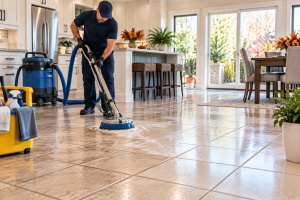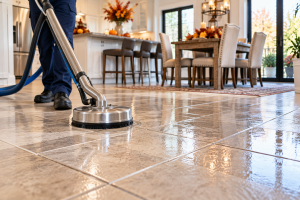




You just had your tile and grout professionally cleaned, and it looks brand new. Now someone tells you to get it sealed. If you’re wondering is grout sealing worth it or whether it’s an upsell you can skip, you’re in the right place. This post explains what grout sealing does, which situations genuinely call for it, and what professional application delivers that a DIY kit may not. By the end, you’ll have a clearer idea of whether sealing makes sense for your tile. If you’re also wondering when professional carpet cleaning is the better choice over rental equipment, our guide covers the key differences.
What Grout Sealing Actually Does
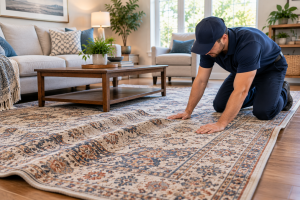
Grout is a porous material. Left unsealed, it absorbs moisture, oils, cleaning products, and organic material over time. That absorption leads to the staining, discoloration, and mold growth that most homeowners spend significant effort fighting. For homeowners maintaining multiple surfaces throughout the home, our professional rug cleaning guide also explains how routine care helps extend the life of valuable area rugs.
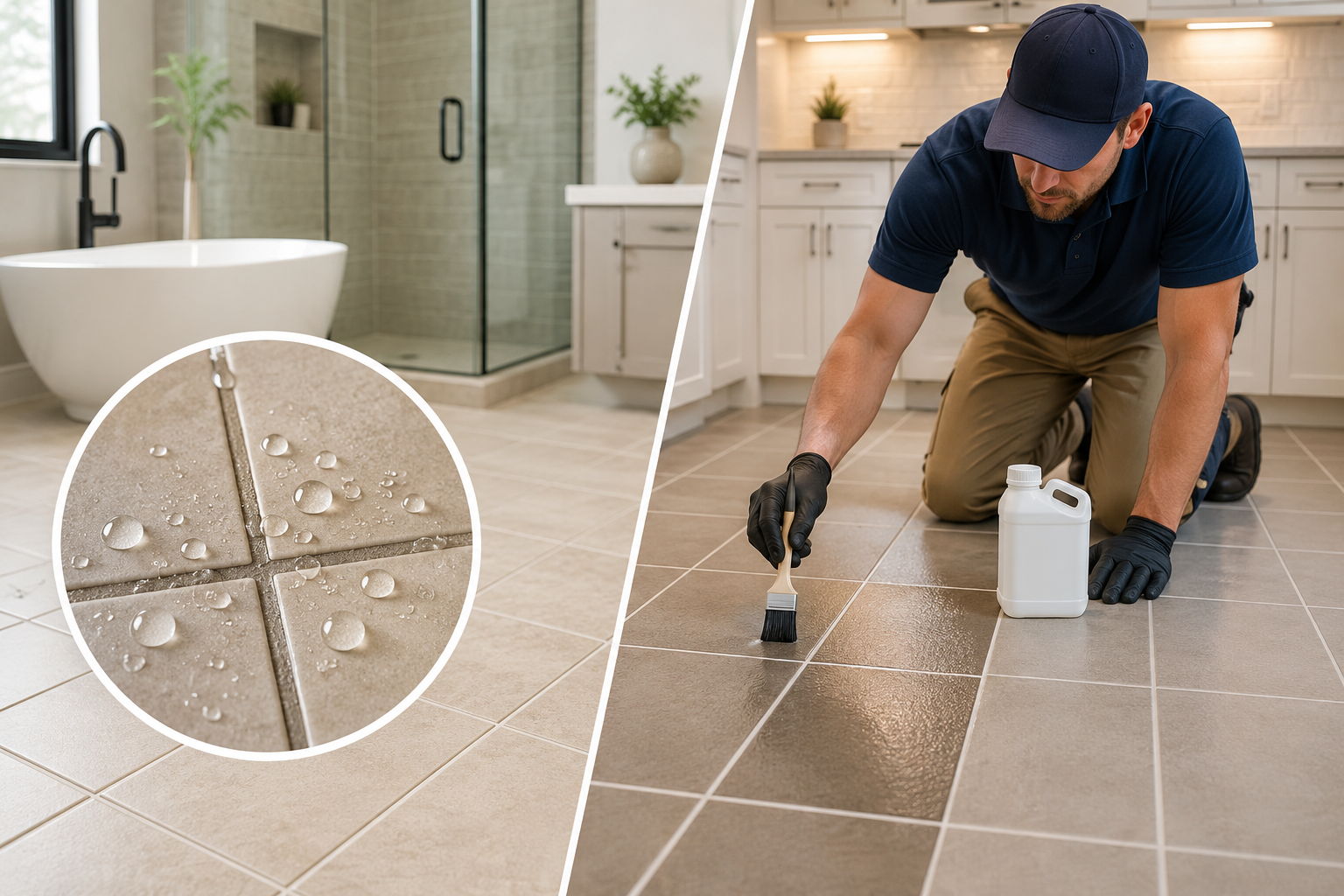
A grout sealer fills those pores with a protective barrier that helps prevent liquids and particles from penetrating the surface. Spills and shower water are less likely to be absorbed, making grout easier to clean and maintain. If you’re asking is grout sealing worth it before the holidays, scheduling cleaning and sealing before heavier seasonal foot traffic can be a practical approach. The same attention to detail is why homeowners trust local residential cleaning specialists in Dix Hills for maintaining carpets, rugs, and upholstered furniture.
There are two main types of sealers:
- Penetrating sealers penetrate the grout and create an internal protective barrier without changing its appearance. This is the most common type used by professionals.
- Topical sealers coat the grout surface and can add a subtle sheen. They protect against surface staining but wear away faster than penetrating sealers.
When Grout Sealing Is Genuinely Worth It
Not every tile surface needs sealing, but for most Long Island homes, it is a worthwhile investment in specific situations.
Grout sealing is particularly valuable in:
- Bathrooms and showers: These are the highest-moisture areas in any home. Unsealed grout in a shower absorbs water and soap residue with every use, creating ideal conditions for mold and mildew, especially during Long Island’s humid summers.
- Kitchen backsplashes and countertops: Grout near cooking areas consistently absorbs cooking oils, food particles, and liquids. Sealing prevents permanent staining and makes routine cleaning much easier.
- Mudrooms and entryways: High foot traffic combined with tracked-in dirt, moisture, and debris makes sealed grout a practical necessity in these areas.
- After professional cleaning: The best time to seal grout is immediately afterward. The grout is free of residue that would otherwise be locked in beneath the sealer, and the clean surface provides the sealer with maximum adhesion. The same clean-first approach applies to other surfaces, which is why professional carpet cleaning in New Hyde Park, NY can be useful for homeowners looking to maintain carpets alongside freshly cleaned tile and grout.
When Sealing May Not Be Necessary
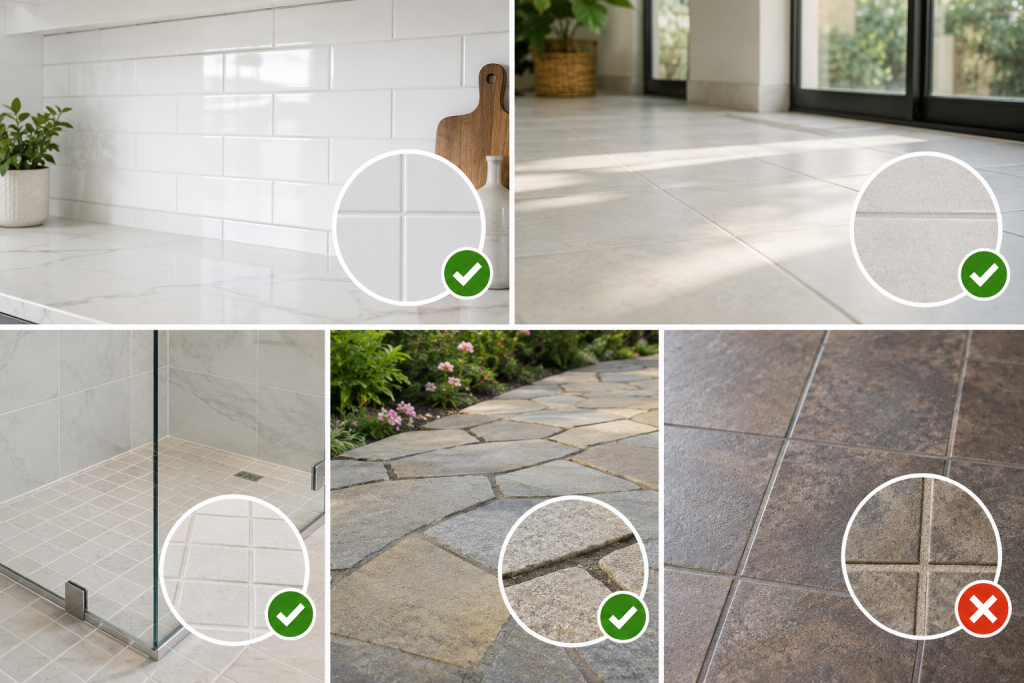
- Glazed ceramic and porcelain tiles do not require sealing because their surfaces are non-porous. Only the grout lines need attention.
- Epoxy grout is non-porous by nature and does not absorb moisture or stain the way cement-based grout does. Sealing epoxy grout provides no benefit.
- If your grout is in very good condition and in a low-moisture, low-traffic area, sealing may not be an urgent priority, though it still adds a useful layer of protection. For homeowners maintaining multiple surfaces throughout the home, Steam Squad’s carpet cleaning services in East Norwich can also help keep carpets professionally maintained.
DIY Grout Sealing vs Professional Application
Grout sealer products are available at home improvement stores, and you can apply them yourself. The results, however, are not always the same as professional applications, for a few important reasons. Understanding grout sealing and moisture damage prevention can also highlight why controlling moisture matters when maintaining different surfaces around the home.
Where DIY grout sealing falls short:
- Store-bought sealers are typically less concentrated than professional-grade products, meaning the barrier they create is thinner and wears away faster.
- Applying sealer over grout that has not been thoroughly cleaned first locks in residue, staining, and bacteria beneath the protective layer.
- Uneven application leaves areas of grout partially or fully unprotected.
- Most DIY sealers require reapplication every 6 to 12 months, while professional-grade penetrating sealers often last 3 to 5 years.
Professional application ensures the sealer goes on over genuinely clean grout, is applied evenly across all lines, and uses a product quality that holds up longer under real-world conditions. Homeowners taking a whole-home approach to cleaning can also consider Steam Squad’s carpet cleaning services in Valley Stream for professional care beyond tile and grout.
Steam Squad pairs professional tile and grout cleaning with sealing recommendations so Long Island homeowners get the full benefit of a properly prepared and protected surface. Keeping porous surfaces cleaner may also help reduce the buildup of moisture, dirt, and other contaminants, which is why understanding how grout sealing also improves indoor air quality can fit into a broader whole-home cleaning approach.
What Grout Sealing Costs on Long Island
Grout sealing is typically priced by square footage or as an add-on to a professional cleaning service.
- Small bathroom (50 to 80 sq ft of tile): $75 to $150
- Standard bathroom (80 to 150 sq ft): $100 to $200
- Kitchen backsplash: $60 to $120
- Full-room tile floor sealing: priced by square footage
Note: These are starting prices for basic standard sealing of tile and grout in excellent condition with no heavy staining, mold, or buildup. Our prices are never that low for anything other than a basic standard job, and most projects are priced higher based on the actual grout condition and any required prep or cleaning work. Similar factors, such as surface condition and the amount of cleaning required, can also affect the scope of carpet cleaning in Smithtown.
Bundling sealing with a professional cleaning visit is the most cost-effective approach and ensures the best possible results since the grout is already clean and prepped. Request a free estimate from Steam Squad to get accurate pricing for your specific space.
Conclusion
Grout sealing is worth it for the vast majority of Long Island bathrooms, kitchens, and high-traffic tile areas. The protection it provides against staining and moisture absorption can make grout easier to maintain, and professional application helps ensure that protection holds up over time. The best time to seal is right after a thorough professional cleaning, when the grout is completely clean and the sealer can bond properly. Homeowners looking for local cleaning specialists in Roslyn or Steam Squad’s carpet cleaning services in East Northport can also get professional care for other surfaces throughout the home.
Take care of your tile investment the right way. Book a tile cleaning and grout sealing service with Steam Squad and keep your Long Island home cleaner and easier to maintain all year long. If your carpets need attention as well, carpet cleaning in Centerport can help extend that professional care to another heavily used surface in your home.
Frequently Asked Questions
1. How long does professional grout sealing last?
Professional-grade penetrating sealers typically last 3 to 5 years in normal residential use. High-moisture areas like showers may need resealing on the shorter end of that range.
2. Can I seal grout myself?
Yes, but the results are typically less durable than professional applications. Store-bought sealers are less concentrated, and applying them over grout that has not been thoroughly cleaned reduces their effectiveness and can lock in existing stains or bacteria.
3. Should I seal new grout or wait?
New cement-based grout should be allowed to cure for at least 48 to 72 hours before sealing. After that, sealing as early as possible is recommended to prevent initial staining before the grout absorbs anything.
4. Does grout sealing prevent mold completely?
Sealing significantly reduces mold growth by blocking the moisture that mold needs to colonize grout. It does not eliminate the risk of mold entirely, particularly in high-humidity environments, but, combined with proper ventilation, it makes a substantial difference.
5. Does Steam Squad offer grout sealing services on Long Island?
Yes. Steam Squad provides professional tile and grout cleaning and can advise on sealing as part of the service. Contact their team for details and scheduling across Long Island.