



Table of Contents
If you’ve ever tried to price rug cleaning in Long Island—Nassau or Suffolk—you already know it’s a bit like trying to guess what’s inside a sealed box. Every company gives a different number. Some charge “per foot,” some give flat rates, and a few won’t quote anything until they’ve touched the rug like it’s a sacred artifact in a museum. Understanding rug cleaning costs can help homeowners compare services more confidently and avoid unexpected charges.
Truth is, rug cleaning pricing isn’t random. It’s a blend of size, fibre, condition, construction, and sometimes the not-so-fun part—transport. Once you understand these levers, the whole pricing game finally makes sense. Many homeowners who work with trusted carpet cleaners in Westbury are often surprised to learn how many factors influence the final cost of professional rug care. Homeowners comparing local carpet cleaners in Old Westbury should also ask how rug size, material, condition, and cleaning method affect the final price.
Let’s dig in like an expert rug technician who has spent half their life vacuuming sand out of wool piles.
The Real Story Behind Rug Cleaning Prices on Long Island
Long Island is a strange beast—sand from Jones Beach, pet hair from everybody’s golden retriever, humidity that curls your hair, and those salt-laced winters. Rugs here… age differently.
And so do the cleaning costs.
Most Long Island cleaners build pricing using a square-foot model, then stack add-ons based on:
- Fibre type
- Level of soil
- Pet accidents
- Transport effort
- Cleaning method (on-site vs in-plant)
Homeowners are often surprised that two rugs the same size can cost wildly different amounts. But fibres have attitudes. Silk is a diva. Wool is an old wise uncle. Polypropylene is the easygoing cousin who doesn’t complain.
Follow our social media pages for rug care insights, cleaning transformations, and expert maintenance tips for Long Island homes.
Rug Size: The Pricing Foundation (Bigger Rug = Bigger Bill)
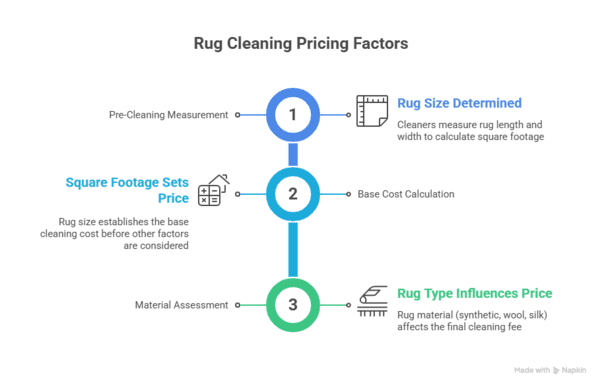
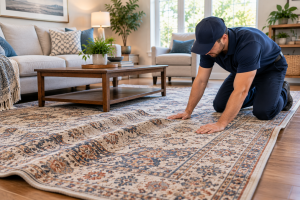
Before anything else, cleaners measure your rug:
Length × Width = Square Footage
A rug that is 8′ × 10′ = 80 sq. ft.
This measurement determines the base cost before the fancy stuff gets added. Rug cleaning costs are often calculated using square footage as the starting point for pricing.
Why Size Matters
- Larger rugs take longer to clean
- They hold more soil
- They require more shampoo, water, and drying space
- Transporting them is harder (especially in older Long Island homes with tight foyers)
When comparing trusted carpet cleaners in Bethpage, homeowners should also confirm whether pickup, transportation, and delivery are included in the quoted rug cleaning price.
Typical Square-Foot Pricing
(Not listing exact numbers—each company differs.)
But typically:
- Synthetic rugs ➝ Lower range
- Wool rugs ➝ Mid to upper range
- Silk/Oriental rugs ➝ Premium
Pricing can also vary between services, so homeowners considering carpet cleaning Bellmore providers should compare what is included in the base rate before choosing a company. For example, your 80 sq. ft. wool rug may cost more than your neighbor’s 80 sq. ft. synthetic rug simply because wool requires gentler handling and a more controlled dry.
Want examples? SteamSquad provides transparent rug size–based pricing here:
👉
https://steamsquad.com/rug-cleaning-long-island/
Fibre Type: The Secret Cost Multiplier (Wool, Silk, Synthetic)
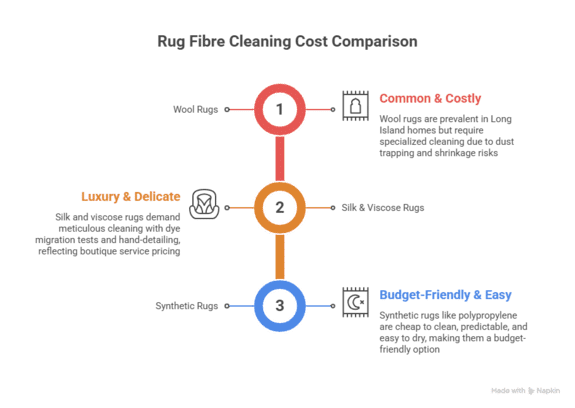
Some fibres are easy. Others behave like they survived a royal dynasty. Different materials can significantly impact rug cleaning costs because delicate fibres require specialized cleaning methods and drying techniques. Experienced local carpet cleaners in Glen Head understand how different rug materials require customized care to prevent damage during the cleaning process.
Wool Rugs (Most Common in Long Island Homes)
Used in living rooms, dining rooms, inherited from relatives in Lake Grove or Great Neck.
Wool rug cleaning Long Island homeowners arrange typically requires more controlled cleaning and drying because wool can shrink or react poorly to improper treatment. Wool often costs more because:
- It traps dust deeper
- Needs pH-balanced shampoos
- Can shrink if mishandled
- Requires slower drying
For delicate wool rugs, working with trusted carpet cleaners in Long Beach can help ensure the appropriate cleaning method and drying process are used.
Silk & Viscose Rugs (Luxury Pricing)
These are delicate and demand:
- Dye migration tests
- Low-water cleaning
- Hand-detailing
- Careful drying to prevent texture changes
Silk is priced like a boutique service. Cleaning it is like cleaning a wedding dress—not a hoodie. Many of the same precautions that help prevent common upholstery maintenance mistakes also apply when caring for delicate silk rugs and fabrics.
Synthetic Rugs (Budget-Friendly)
Polypropylene, nylon, polyester—your typical Costco or HomeGoods rug.
- Cheap to clean.
- Predictable.
- Easy to dry.
Also often the kind you toss in the garage after five years.
Rug Construction: Hand-Knotted vs Machine-Made
Construction determines whether your rug washes like a towel—or like a fragile historical scroll.
Hand-Knotted Rugs
Common in Persian, Afghan, Turkish, or Oriental styles.
Cost more to clean because:
- Fibres are denser
- Colors can bleed
- Often require immersion rug washing
- Inspection is more time-consuming
Hand-Tufted Rugs
These often have a latex backing that breaks down over time.
Tufted rugs:
- Shed more
- Are harder to dry
- Sometimes release odors
Cleaning them costs slightly more due to care required in preventing delamination.
Machine-Made Rugs
These are the easiest—uniform structure, predictable results, lower rates.
Soil Level & Condition: How Dirty Is Too Dirty?
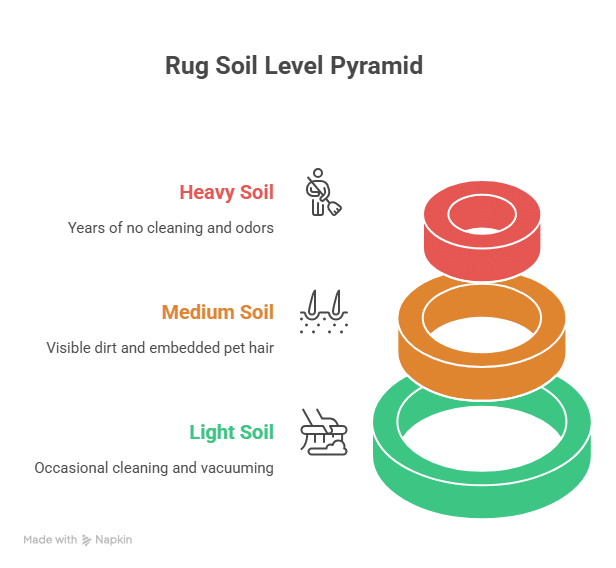
Let’s be honest: Long Island homes see chaos. Muddy spring days, pet hair, wine nights, holiday dinners, and toddlers who consider rugs a giant napkin. Heavy staining, odors, and embedded dirt can increase rug cleaning costs due to the extra treatments and labor required.
Light Soil (Cheaper)
- Occasional cleaning
- Regular vacuuming
- No major spills
Medium Soil
- Visible tracked-in dirt
- Pet hair embedded
- Kitchen grease drift
Heavy Soil (Expensive)
- Years of no cleaning
- Heavy pet urine
- Odors
- Greasy dark traffic lanes
Heavily soiled rugs often require:
- Multiple shampoo passes
- Enzyme soaking
- Centrifuge extraction
- Deep immersion washing
This adds 🚀 to the bill.
Pet Accidents: The Sticker Shock Nobody Mentions
Pet urine is a whole different creature.
Urine seeps:
- Through the pile
- Into the backing
- Into the pad
- Sometimes into the hardwood below
Removing it requires:
- Odor treatments
- Enzyme baths
- Submersion flushing
- Specialized equipment
If your dog Baxter has been “expressing himself” too often, expect extra charges.
NY.gov even notes that untreated urine contributes to indoor air bacteria and allergens:
On-Site Cleaning vs In-Plant Cleaning
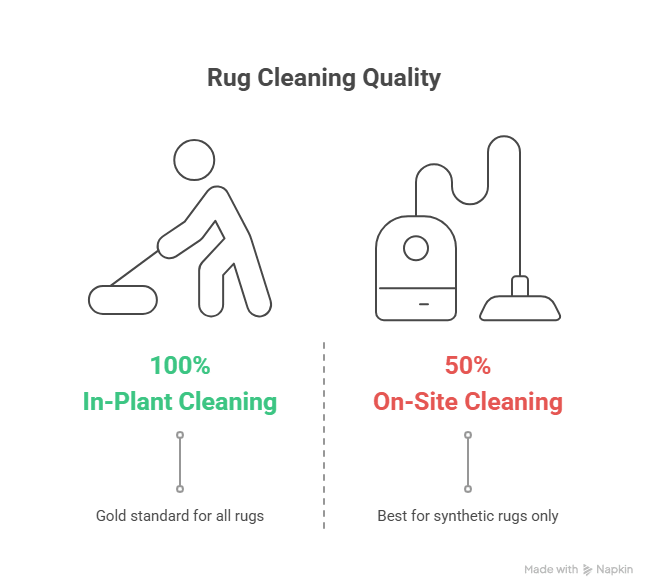
Two worlds. Big difference.
On-Site Cleaning
Done in your home.
Best for:
- Large synthetic rugs
- Low-pile rugs
- Rugs that can’t be moved
Limitations:
- Not ideal for wool
- Can’t rinse fully
- Risk of wood floor damage
In-Plant Cleaning
The gold standard.
Best for:
- Wool, silk, Oriental
- Heavy soil
- Pet odor
- Antique or sentimental rugs
Inside a rug plant, technicians can use:
- Centrifuge rug drying systems
- Full-immersion washing
- Controlled humidity drying rooms
- Rug fibre identification tests
This obviously costs more—but results are night-and-day better. For antique, damaged, or highly valuable rugs, professional rug restoration services may be more appropriate than standard cleaning because restoration requires specialized assessment and treatment.
Visit our Google Business Profile to explore verified customer feedback and real rug cleaning experiences from local homeowners.
Visit Our Shop
Steam Squad Carpet & Upholstery Cleaners Long Island, NY
5.0 ⭐⭐⭐⭐⭐ (164 Google reviews)
- Phone: (516) 567-8966
- steamsquad@gmail.com
- Long Island, New York
- Mon-Fri – 8am to 8pm. Sat/Sun – 9am-5pm
Pickup, Delivery & Transport Fees on Long Island
Transport is a hidden cost most homeowners forget.
Think about it:
- Long Island has tolls
- Traffic
- Tight driveways
- Homes with 2–3 floors
- Beach sand everywhere
Many companies charge:
- Flat pickup fee
- Mileage-based fee
- Minimum order amount
Some offer free pickup, but the cost is usually baked into the per-foot rate.
Add-On Services That Change the Final Price
Deodorizing
For rugs that survived:
- Pets
- Spilled milk
- Cigarette smoke
- Damp basements
Fabric Protection
Helps prevent future stains (useful for homes in Garden City, Babylon, Smithtown).
Rug Repairs
- Fringe re-sewing
- Edging
- Patch repairs
Repairs can cost more than cleaning depending on complexity.
Our skilled technicians, proven cleaning techniques, and trusted service reputation help ensure quality care for every rug type
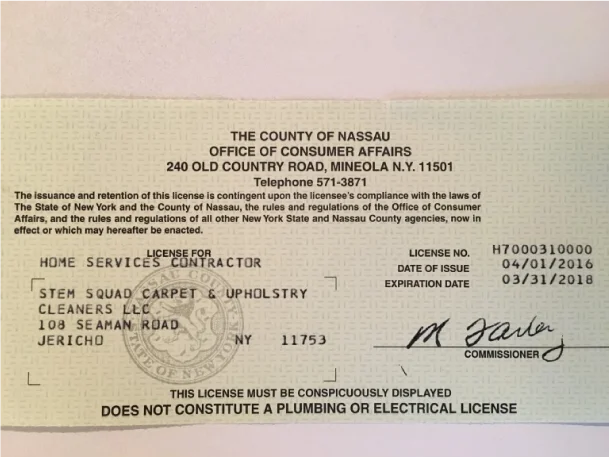
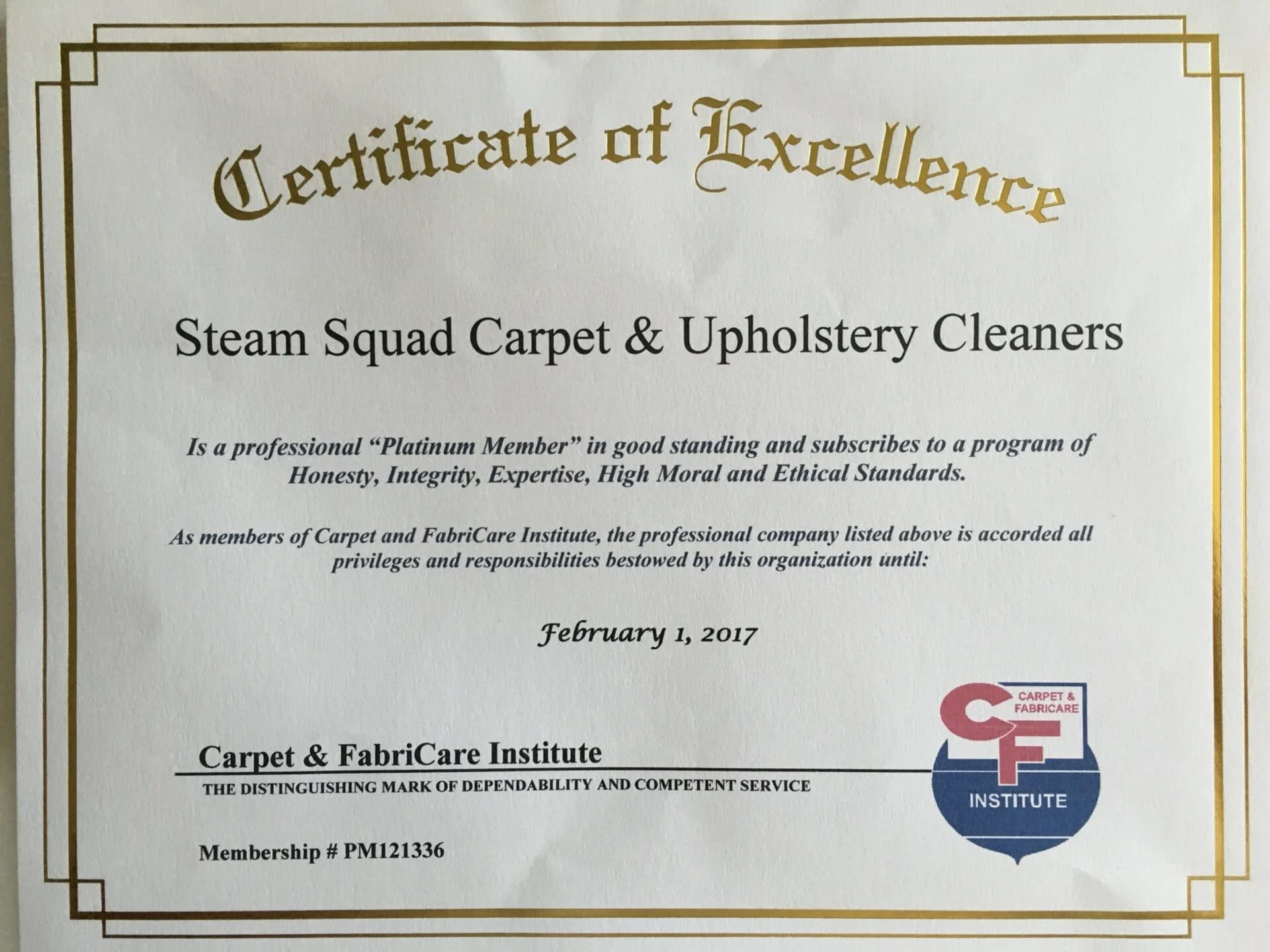
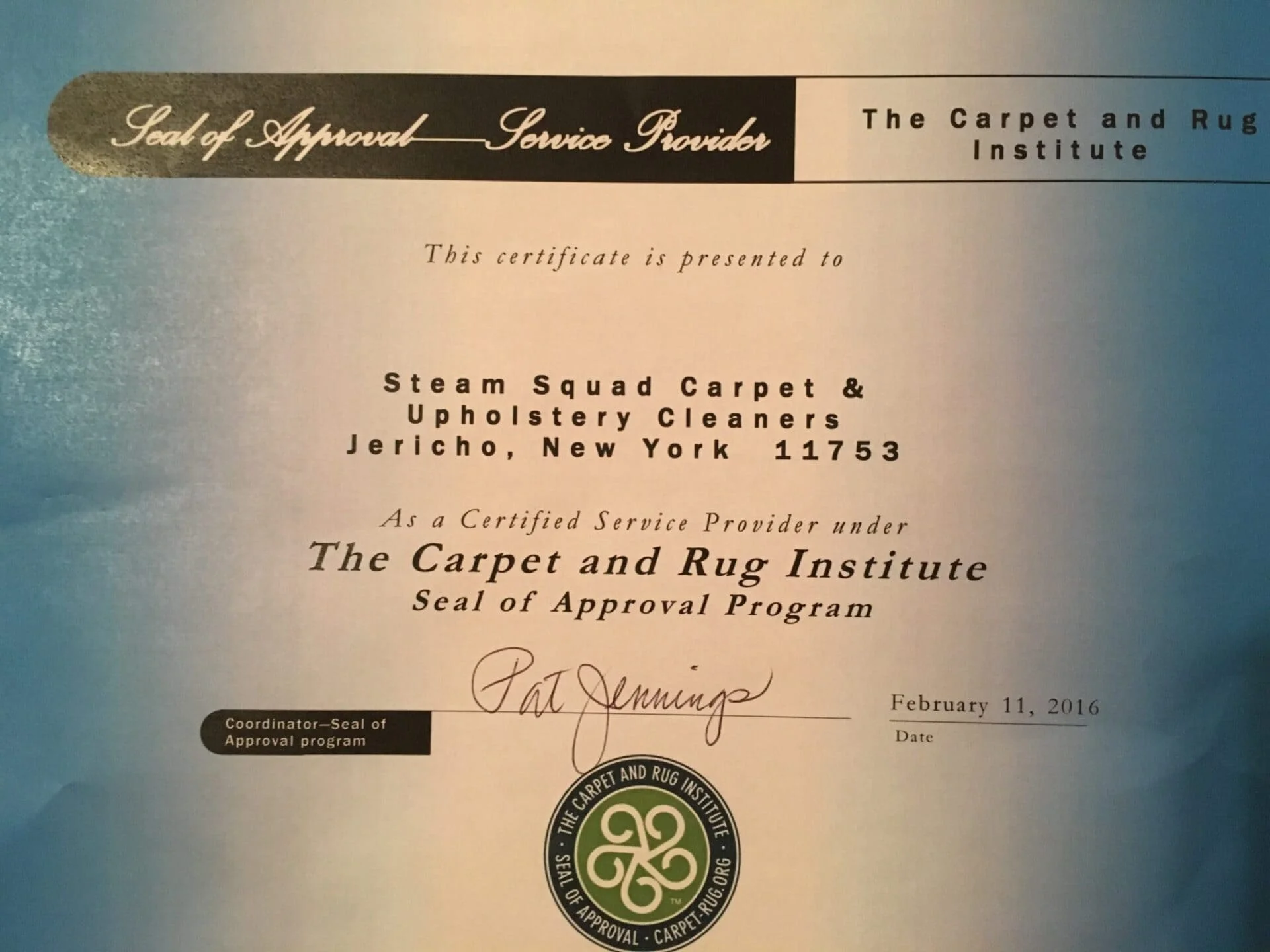
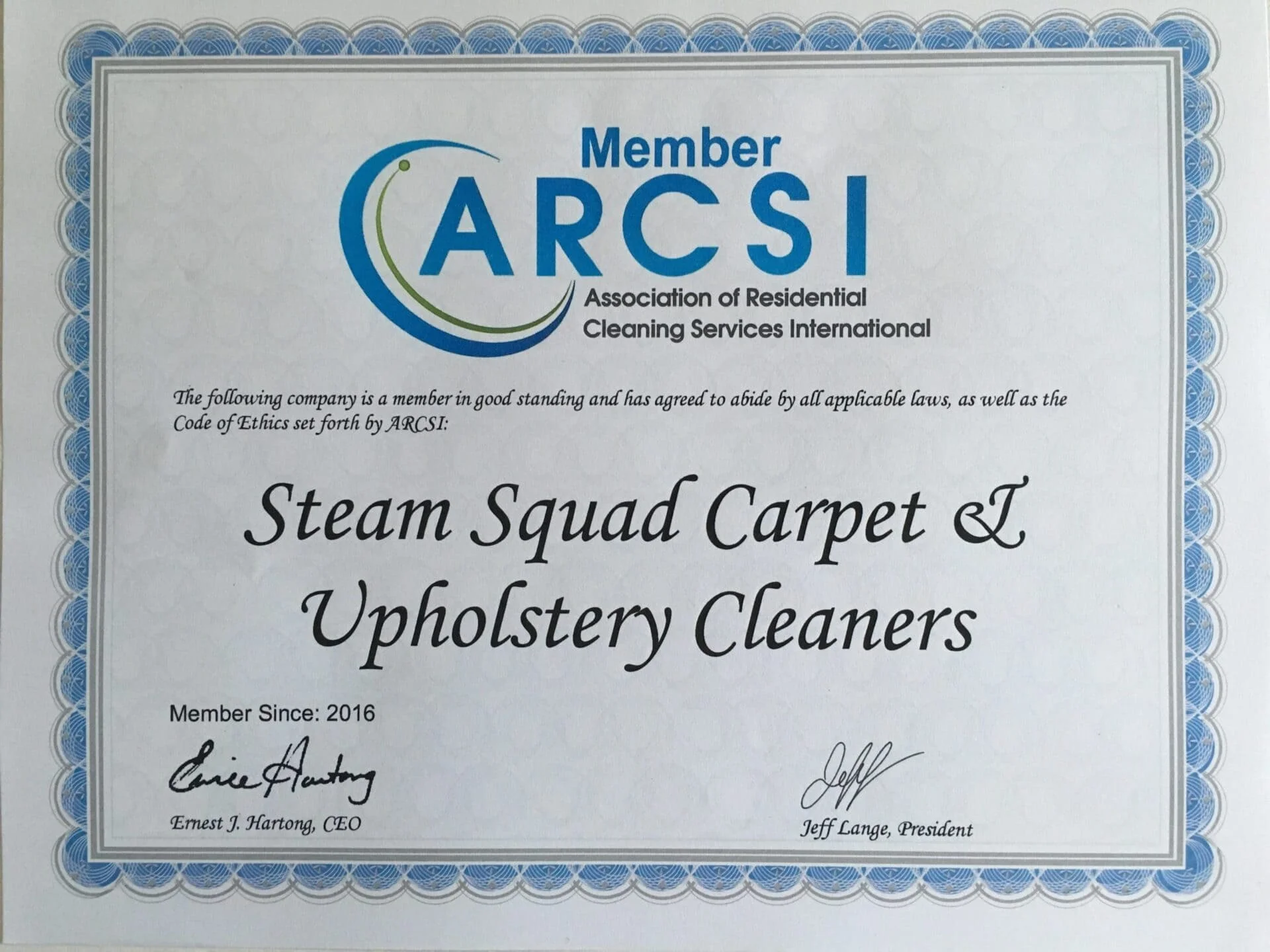
Affiliations & Certificates
Real Examples of Rug Cleaning Costs (Hypothetical But Realistic)
| Rug Type | Size | Fibre | Soil Level | Estimated Cost |
|---|---|---|---|---|
| Entry Rug | 3×5 | Synthetic | Light | Low tier |
| Living Room Rug | 8×10 | Wool | Medium | Mid tier |
| Persian Rug | 9×12 | Hand-knotted | Heavy | High tier |
| Shag Rug | 7×10 | Polyester | Heavy | Medium-high |
FAQ's
Frequently Asked Questions About Rug Cleaning Costs in Long Island
1. Why do wool rugs cost more to clean than synthetic rugs?
Wool holds more soil, needs special shampoos, and requires controlled drying, which increases both labor and product use compared to synthetic rugs. This is why professional wool rug washing services often involve more detailed cleaning processes than standard synthetic rug treatments.
2. Is in-home rug cleaning cheaper than in-plant cleaning?
Yes, usually in-home rug cleaning is cheaper, but the results are more limited. In-plant cleaning is deeper, safer, and generally better for wool or Oriental rugs. Understanding common oriental rug cleaning mistakes can help explain why professional in-plant cleaning is often recommended for valuable rugs.
3. How much does pet urine affect cleaning cost?
Pet urine often adds a noticeable surcharge because it requires enzyme treatments, deodorization, and sometimes full submersion cleaning to properly remove odor and contamination. These extra steps are essential for protecting carpets in coastal homes where moisture and humidity can intensify lingering odors.
4. Does rug thickness impact cleaning cost?
Yes. Thicker rugs trap more dirt and take longer to rinse and dry, which means more time, more water, and more energy, all of which increase the overall cleaning cost.
5. Is pickup and delivery worth it on Long Island?
Absolutely. Most homeowners prefer pickup and delivery because transporting a large rolled rug in a regular car is inconvenient and sometimes impossible, especially across Long Island traffic and distances. Similar to the considerations involved in comparing DIY and professional tile cleaning, professional pickup services add convenience while helping ensure valuable items are handled properly.